Some links on this page are affiliate links; we may earn a commission if you buy, at no cost to you.
Knowing how to care for suede shoes comes down to a small kit, a few minutes and a little restraint. Suede is leather with the smooth outer layer removed, so the surface is a nap of fine fibres. It is soft, it takes colour beautifully, and it marks easily. It is also far more forgiving than its reputation suggests, provided you treat it before it is dirty rather than after.
The suede in Spectre, Skyfall and No Time To Die is a useful case study. Daniel Craig’s Bond wears it on rooftops, in Norway, in Matera and on the Thames, and never looks as though he has been fussing over it. That is the standard worth aiming for: a boot that looks used, not neglected.
The short answer
Buy a suede brush and a suede eraser, and apply a protector spray before the first wear. Brush the shoes after each wearing, always in one direction, then rest them for a day. Remove marks with the eraser while they are dry. If they get wet, let them dry slowly at room temperature with shoe trees inside, then brush the nap back up. That routine, repeated, is all most pairs ever need.
What the films show
Bond’s suede is mostly casual, and mostly chosen for weather or travel. The catalogue records him in Crockett & Jones Tetbury chukka boots in the Turkey sequence of Skyfall, including the rooftop train chase, and again in Shanghai. In No Time To Die he wears the Crockett & Jones Molton in dark brown rough-out suede in the Norway scenes, and Drake’s Crosby moc-toe chukkas through the Matera sequences. In the London finale of Spectre he wears a brown suede chukka by Sanders, and in Morocco in the same film a suede jacket that Matchless has confirmed as its own.
Two cautions on detail. The Tetbury on screen is described as antique nubuck, so a current pair is the same model but not necessarily the same leather. And which colour of Sanders boot appears in Spectre, Chocolate or Snuff, is still debated, so we do not claim either. None of this changes the care advice, which is the same for all of them.
Suede, nubuck and rough-out
The three are cousins, and the names are used loosely, so it is worth knowing which you own.
Suede is made from the flesh side of the hide, which gives a soft, short nap. It is the most delicate of the three and the most pleasant to wear.
Nubuck is made from the outer, grain side, lightly sanded. The nap is finer and tighter, and the leather is usually a little tougher, but it still marks and still wants a brush.
Rough-out is leather worn with the rough side facing out, often waxed or oiled at the tannery. The maker of the Crockett & Jones Molton says it treats the surface with wax, which gives it a rugged finish and good water resistance. That is why a rough-out boot is the sensible suede for a wet climate, though it is not waterproof and still repays a spray.
The tools
You need three things, and none of them is expensive.
- A suede brush. The best have brass or nylon bristles on one side and rubber or crepe on the other. The firmer bristles lift the nap and loosen dry dirt; the softer side polishes it. A clean, stiff clothes brush is a poor second.
- A suede eraser. A block of rubber or crepe that rubs out dry marks, scuffs and shiny patches. A clean pencil eraser, white and unscented, will do in a pinch, but a proper block is gentler on the nap.
- A protector spray. A water and stain repellent made for suede and nubuck. It does not make a shoe waterproof; it slows the rate at which water and oil soak in, which gives you time to blot them away.
Add a pair of cedar shoe trees and a soft cloth, and the kit is complete. Be wary of cream polishes and shoe wax on suede, which darken and flatten the nap permanently. Leave them for smooth calf.
The routine
Before the first wear. Brush the boots lightly to lift the nap. Hold the spray about 20cm away and apply two thin, even coats, letting the first dry fully before the second. Do it outdoors or by an open window, and leave the shoes for several hours before you wear them. Test on a hidden patch first if the colour is pale or unusual.
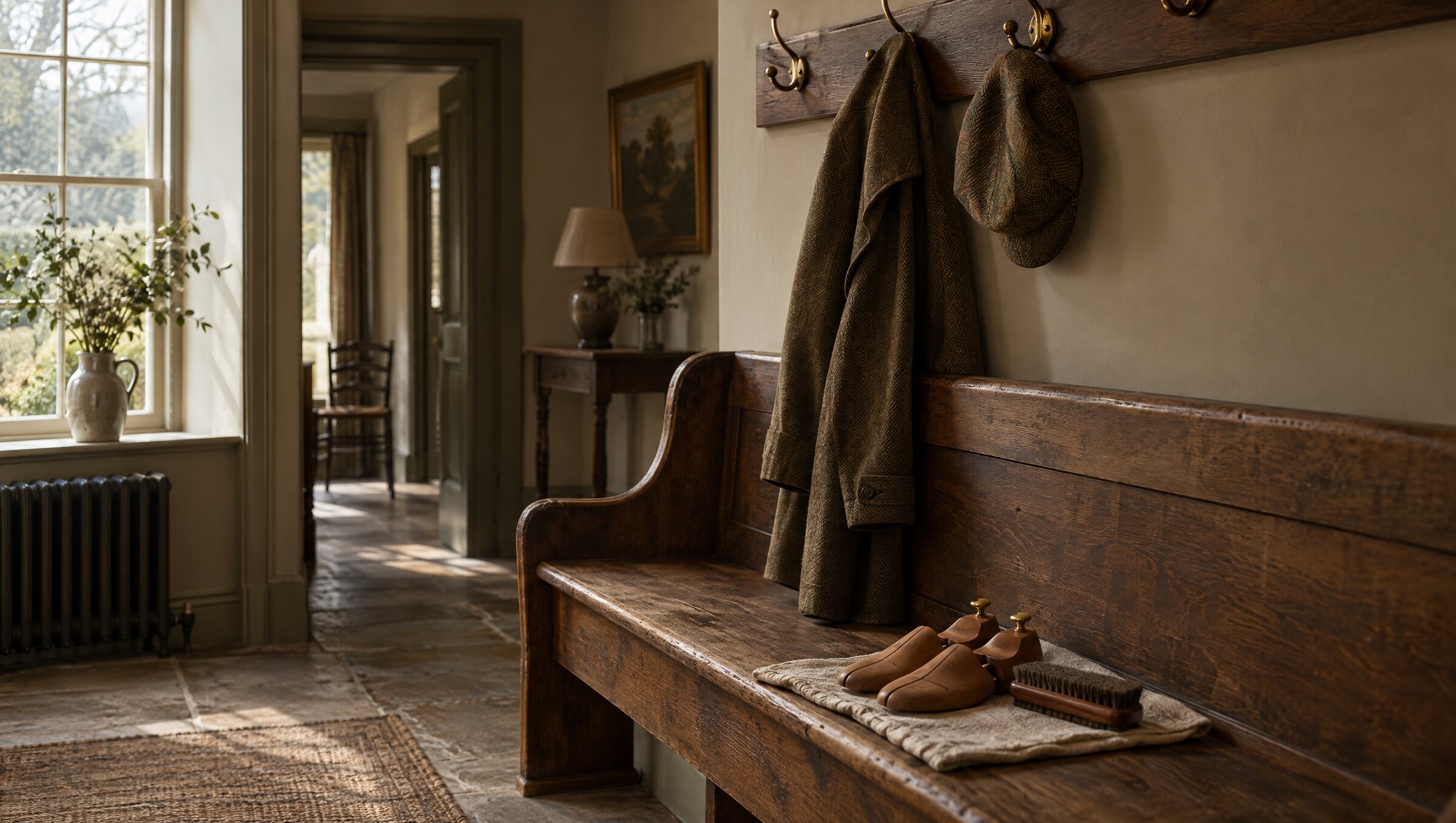
After each wearing. Give the shoes a short brush along the nap to remove dust. This takes under a minute and is the habit that matters most. Rest each pair for a day between wearings, so the leather can release moisture; the same advice holds for any shoe, and suede shows neglect sooner than most.
Every few weeks. Rub out marks and shiny patches with the eraser, working gently in short strokes, then brush the nap back up. Re-apply the spray every few weeks in wet seasons, or whenever water stops beading on the surface.
Our own notes on the boots below say much the same: a protector spray before the first outing, a brush after wearing, and a slow, natural dry for wet pairs.
After rain, salt and mud
Rain. Blot the surface with a clean cloth or kitchen paper, without rubbing. Stuff the shoes with paper, or fit shoe trees, and leave them to dry at room temperature. Never put them on a radiator or beside a heater; heat stiffens the leather and can crack it. When dry, brush the nap back up and re-spray.
Mud. Let it dry completely. Then flake off what you can, and brush the rest away. Wiping wet mud grinds it into the nap.
Salt. Winter pavement salt leaves white tide marks. A cloth dampened with a little white vinegar and water will lift them; dab, do not scrub, and let the shoe dry before brushing. Treat the whole panel so the colour dries evenly.
Oil and grease. Blot at once, then cover the stain with talcum powder or cornflour for a few hours to draw out the oil, and brush it off. A stubborn stain is one for a specialist.
Which pairs to choose, and what to expect
Not every suede boot suits every climate, and the honest answer is to pick for the weather you actually have.
For wet winters, the Crockett & Jones Molton in dark brown rough-out suede is the sensible choice. The waxed finish, Dainite rubber sole and storm welt are all built for weather, and the boot suits the Norway scenes in No Time To Die for a reason. It is not waterproof, so treat it with a spray and dry it slowly after a soaking.
The Crockett & Jones Tetbury is the plain chukka that Bond wears in Skyfall. The maker’s US site lists it in dark brown suede and in two wax calf finishes at the time of writing. Suede is softer and more casual, while wax calf is smoother and, according to one stockist, more water resistant. If your commute is wet, the calf is the easier life; if you want the softer look, the suede asks only for the routine above.
The Drake’s Crosby is unlined suede on a crepe sole, which makes it light and flexible and also means it is best kept for dry weather. Its own product page says as much: the spray helps with light showers, and a pair that gets wet should dry naturally before you brush the nap back. Crepe soles pick up dirt too, so wipe them down as well.
The Sanders Hi-Top is a lined brown suede chukka, also on crepe, and it comes in a lighter Polo Snuff as well as the darker Chocolate. Paler suede shows marks sooner. If you are choosing between the two, take the darker; it forgives more.
Colour matters more than most people expect. Dark brown, navy and olive hide scuffs and water marks; sand and stone show everything. The Clarks Originals Desert London, which Felix Leiter appears to wear in the Jamaican scenes of No Time To Die, comes in a deep pine green that behaves almost like a neutral, and it is a good example of a dark, interesting suede that is easy to live with. Treat it as a warm-weather shoe, and keep the spray to hand.
Suede jackets
The same rules apply to a jacket, with two differences. A jacket meets your skin and your bag strap, so it picks up oil and shine at the collar, cuffs and shoulder. Use the eraser on those points first, then the brush. And it cannot be stuffed with paper to dry. If it gets wet, hang it on a broad, shaped hanger at room temperature, away from any heat.
The Matchless Craig Blouson is the maker’s version of the suede jacket Bond wears in Morocco in Spectre, a close match rather than an identical one. Matchless advises a protector spray before wearing, a gentle brush along the nap, and keeping it out of heavy rain. We would add one choice of our own: take the natural colour. It is the one in the film, and a light suede ages more kindly than people expect, because it shows its wear evenly rather than in dark patches.
Storage and shoe trees
Storage does half the work. Keep suede in a cool, dry, ventilated place, in a breathable cloth bag, never in plastic. Insert cedar shoe trees as soon as you take the shoes off; they hold the shape and draw moisture out of the lining and leather. Keep suede out of direct sun, which fades it, and away from the radiator.
For a jacket, use a wide shaped hanger and leave space between garments, so the nap is not crushed. Do not fold it for long periods. Fold lines in suede are the one thing a brush cannot remove.
When to take it to a cobbler
Home care covers dust, light marks and the occasional soaking. Three things are worth a professional. A stain that has set after a first attempt with eraser and brush; a pair that has dried hard and stiff after being wet; and wear on the soles or heels, which need resoling before the welt is damaged. A good cobbler can also re-dye faded suede, which will return a worn pair to something close to its first colour.
Questions
How do you clean suede shoes at home?
Let them dry if wet, then brush the nap with a suede brush to remove dust and dry dirt. Rub marks gently with a suede eraser, then brush again. For stubborn stains, use a cloth dampened with white vinegar and water, dabbing rather than scrubbing.
Can you waterproof suede boots?
Not completely. A protector spray makes suede water repellent, which slows soaking and gives you time to blot a spill. Re-apply it every few weeks in wet seasons. Waxed rough-out suede resists water better than ordinary suede, but no suede boot should be treated as waterproof.
What do you do when suede gets wet?
Blot, do not rub. Stuff the shoes with paper or fit shoe trees, and dry them at room temperature, away from radiators and direct heat. When dry, brush the nap back up and re-apply the spray.
Do you need a suede brush and eraser?
Yes, and they cost little. The brush keeps the nap lifted and removes dry dirt; the eraser lifts marks and shiny patches. Between them they deal with most of what suede meets in daily wear.
Can you polish suede?
No. Cream and wax polish darken and flatten the nap. Use a coloured suede dye or a suede renovator if the colour has faded, and test on a hidden area first.
The pieces mentioned
- Crockett & Jones Molton: dark brown rough-out suede, the one for weather.
- Crockett & Jones Tetbury: the plain chukka from Skyfall, in suede or wax calf.
- Drake’s Crosby: unlined brown suede on crepe, for dry days.
- Sanders Hi-Top: slim brown suede chukka from Spectre.
- Clarks Originals Desert London: low pine green suede for warm weather.
- Matchless Craig Blouson: plain suede blouson, natural colour.
More boots are in Chelsea & Chukka Boots, and the same principles of simple, regular care apply to every leather we feature in Shoes.
Shop the story
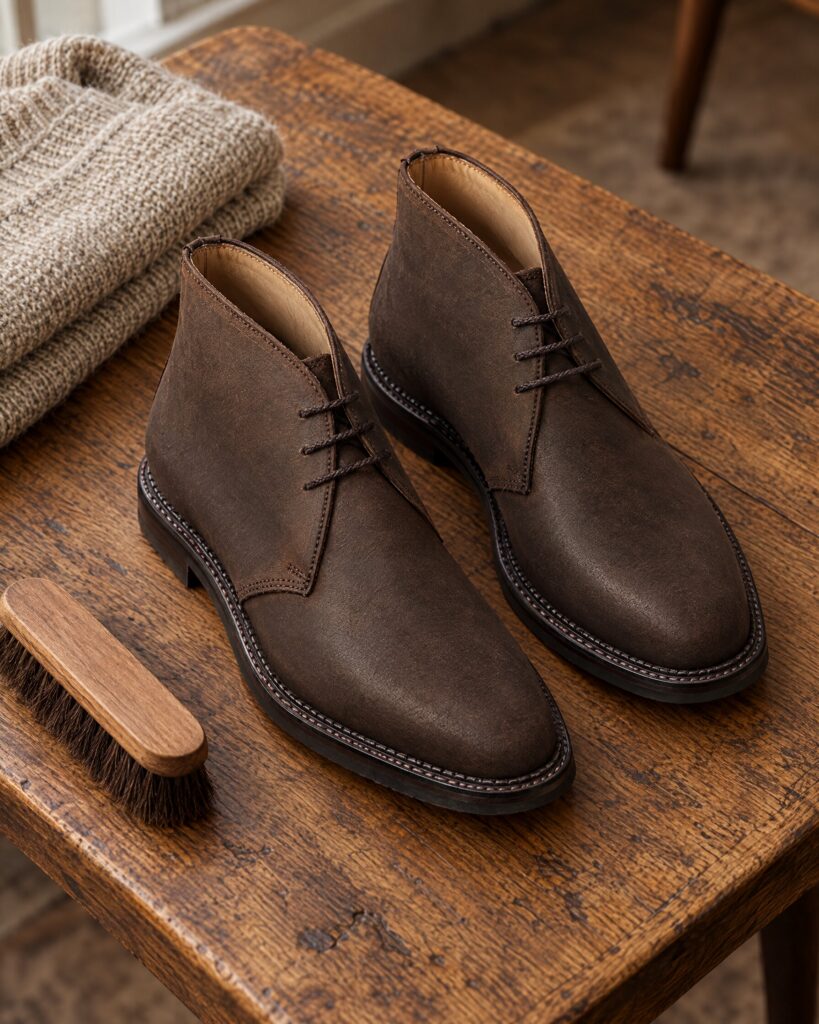 Crockett & Jones Molton Chukka Boots, Dark Brown Rough-Out Suede (No Time To Die)View the piece
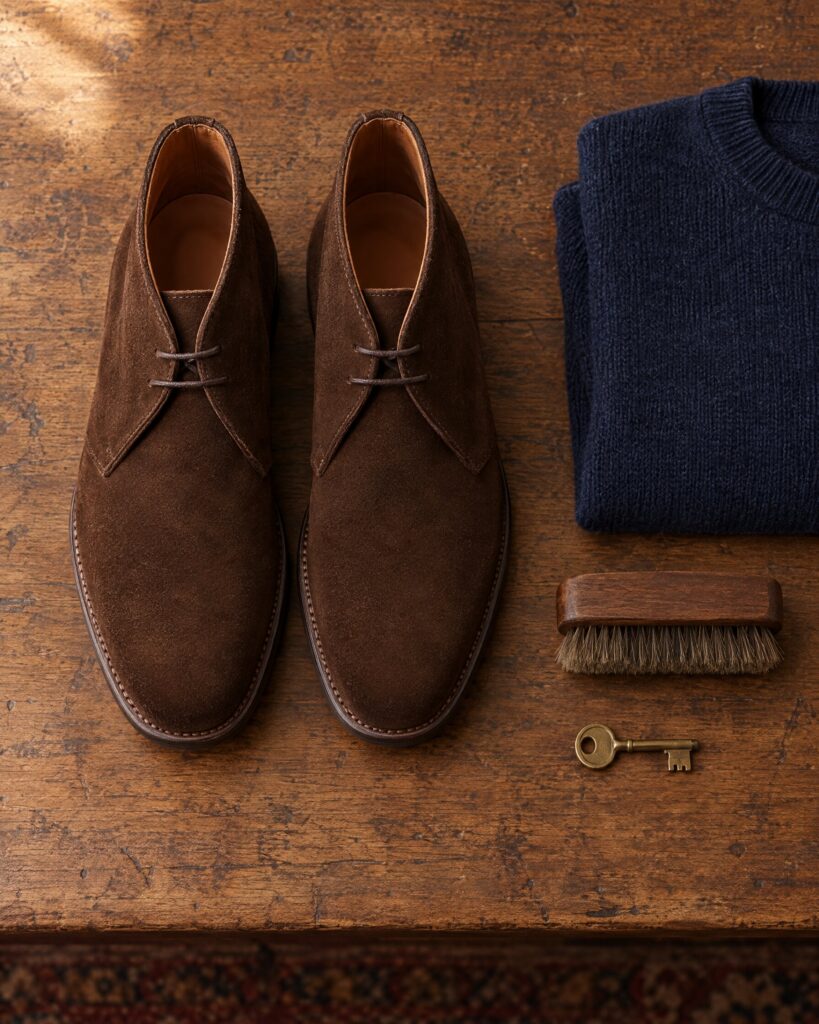 Crockett & Jones Tetbury Chukka Boots (Skyfall)View the piece
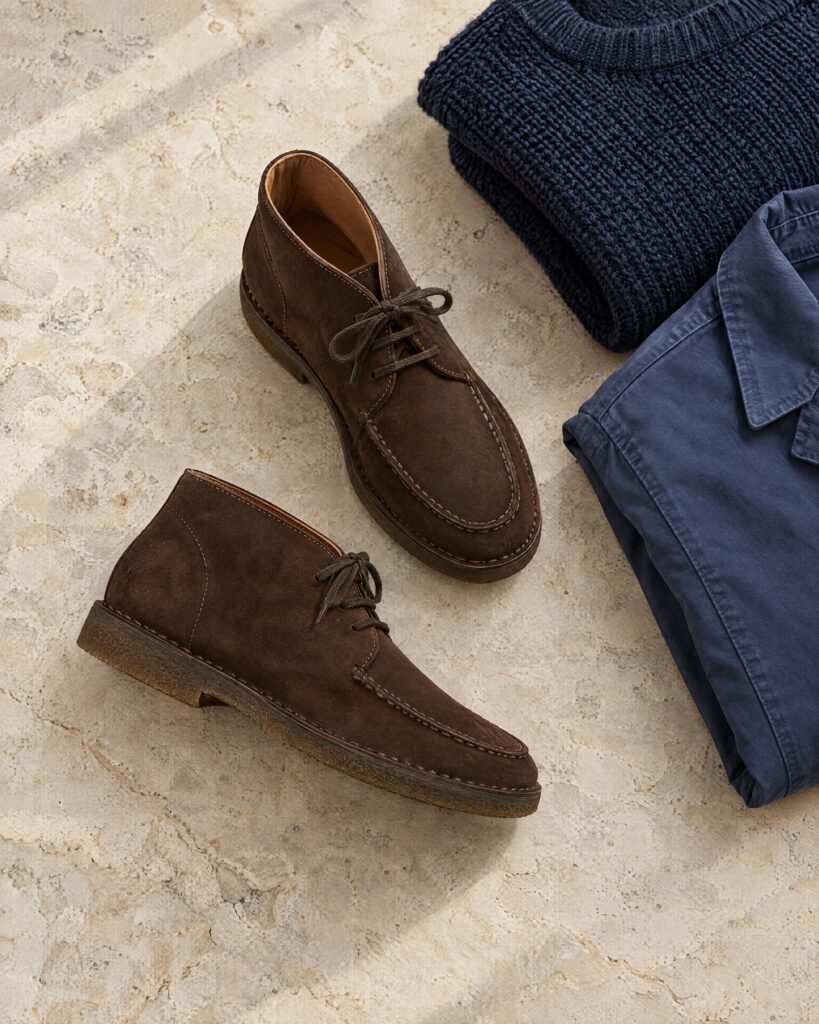 Drake’s Crosby Moc-Toe Chukka Boot Dark Brown Suede (No Time To Die)View the piece
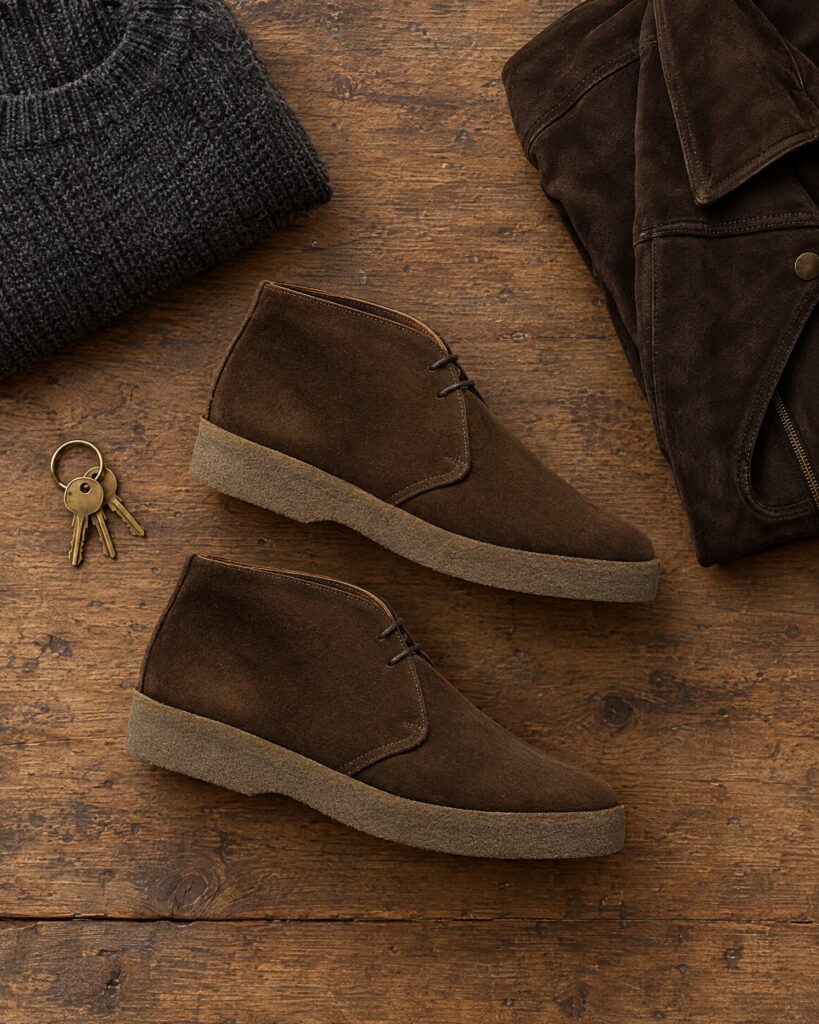 Sanders Hi-Top Chukka Boot (Spectre)View the piece
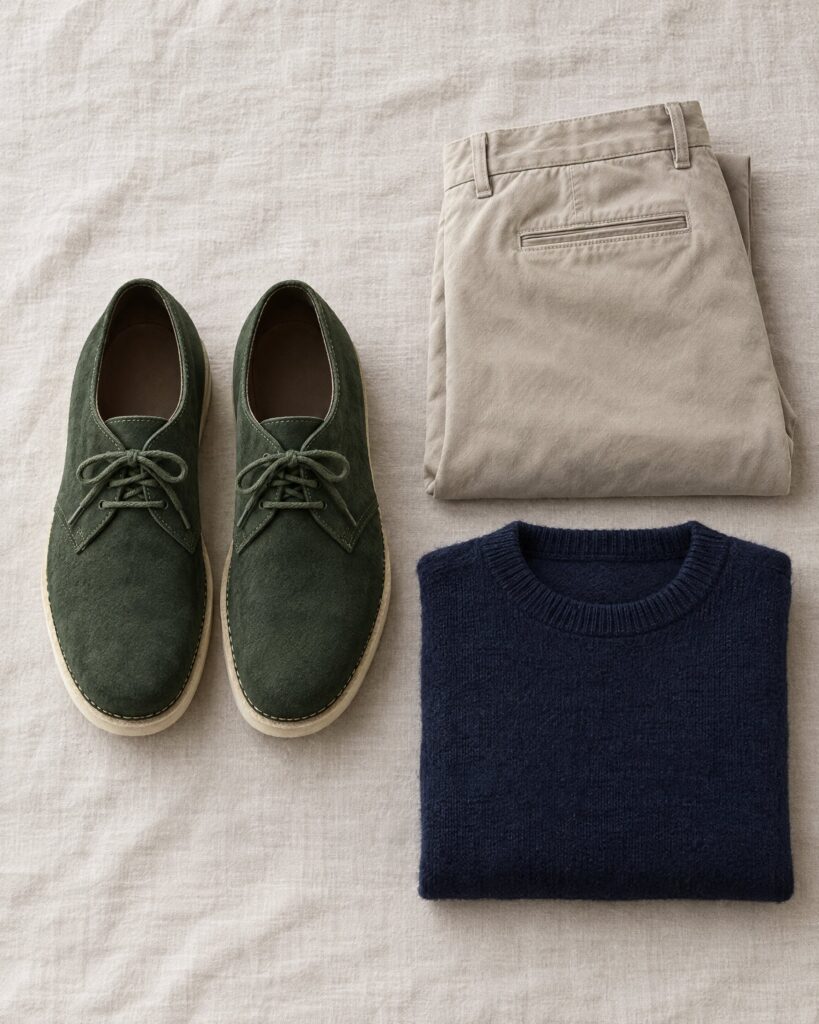 Clarks Originals Desert London Pine Green Suede (No Time To Die)View the piece
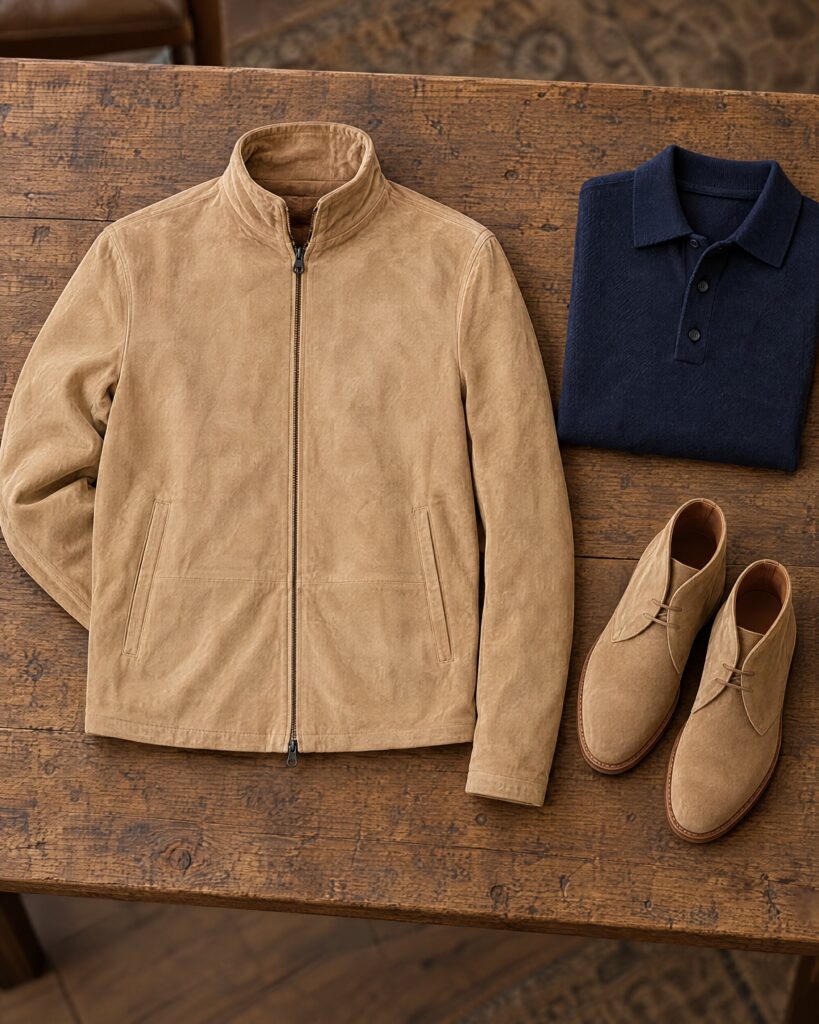 Matchless Craig Blouson Suede Jacket (Spectre)View the piece