Some links on this page are affiliate links; we may earn a commission if you buy, at no cost to you. Full disclosure.
James Bond winter style is not about looking like a man in a film. It is about the few things that keep you warm and composed when the temperature drops: one good knit, one coat you trust, a pair of gloves that fit, and boots that grip. Get those four right and the rest of the season looks after itself. Daniel Craig’s Bond is a useful guide here, because his winters are practical ones, spent in Austrian snow, Norwegian forest, Shanghai and London, and the clothes chosen for them are plain by design.
The short answer
Wear a fine knit in cashmere or merino next to the skin, and let it do the work a shirt and tie would. Add one coat in a dense, dull cloth, navy or olive, cut close enough to wear over a jacket. Keep a pair of black leather gloves for town and a pair of technical ones for everything else. Choose a boot with a proper sole. Stay within three colours: navy, grey and black, with brown or olive as the accent. Nothing here needs to be new every year.
What the winter films wear
The cold chapters of the Craig films are short but well dressed. In Spectre, Bond meets Mr White in Austria in a pale cable-knit roll neck, and later wears a fine mock turtle neck beneath a suede jacket. In Skyfall he works under cover in Shanghai in a black v-neck and a navy peacoat. In No Time To Die the Norway scenes call for a long green needlecord coat, brown suede boots and corduroy trousers. We would not copy any of it whole. What carries over is the method: soft layers, muted colour, and clothes chosen for the weather before the occasion. More of it sits on the Daniel Craig page.
The knit
Everything starts with what sits against the skin, and that is why the knit matters more than the coat. A roll neck fills the gap at the throat of a jacket far more neatly than an open collar, and in pure cashmere it is warm without weight. The film’s grey version is the N.Peal Cable Roll Neck Sweater in Fumo Grey: 100% Mongolian cashmere with a fine cable that reads as plain grey from across a room. Fumo is Italian for smoke, and the colour is pale enough to lift a dark jacket and neutral enough to sit with navy, charcoal, brown and olive.
If a roll neck feels too much indoors, the mock neck is the quieter route. The N.Peal 007 Fine Gauge Mock Turtle Neck is cashmere spun with silk (70/30), thin enough to add warmth under a suede or tweed jacket without bulk at the shoulder or cuff. Bond wears the Lapis Blue in Spectre, which N.Peal no longer lists; the maker still sells the charcoal. It suits dinner, a gallery or the train to the country, where a tie would be stiff and a crew neck too casual.
For a heavier knit, the N.Peal 007 Ribbed Army Sweater in navy is 90 per cent superfine merino and 10 per cent cashmere, with canvas patches at the shoulders and elbows and a drawstring neck. Bond wears it in No Time To Die. Our view is that it works best when you leave it alone: with dark denim or grey flannel rather than the combat trousers of the film. And if you want the Shanghai look, the John Smedley Bobby V-Neck in extra fine merino is the answer to the question of what goes under a good coat. It is made in England, and the maker says it can be machine washed at 30°C, which is rare for something this fine.
The coat
Choose a coat in a dense cloth that holds its shape, and choose it before anything else in the wardrobe, because it is seen most. The strongest case for a navy one is the Billy Reid Bond Peacoat. It is melton wool, cut close with a small peak lapel and bound seams in place of a lining, with horn buttons and handwarmer pockets. The maker describes the cloth as warm and sturdy, and its current navy version is a 75/25 wool and polyamide blend. Because it is so close in cut, it sits over a jacket less comfortably than over a knit; size for the knit.
The coat from Norway is a different proposition. The Massimo Alba Duster Coat, sold as the RAIN2 in Agades, a light olive green, is cut in fine cotton needlecord and is unlined. That makes it a light layer, not a winter overcoat. We would treat it as the coat for the cold, dry days of early winter or spring, over a good knit, and keep the peacoat for January. If you prefer something that takes weather, the Rogue Territory Ridgeline Supply Jacket in ten-ounce waxed canvas is naturally water repellent, though not waterproof, and it is unlined, so what you wear beneath it sets the season. It is the piece from the film that most men could wear tomorrow. See the full coats and outerwear range for the rest.
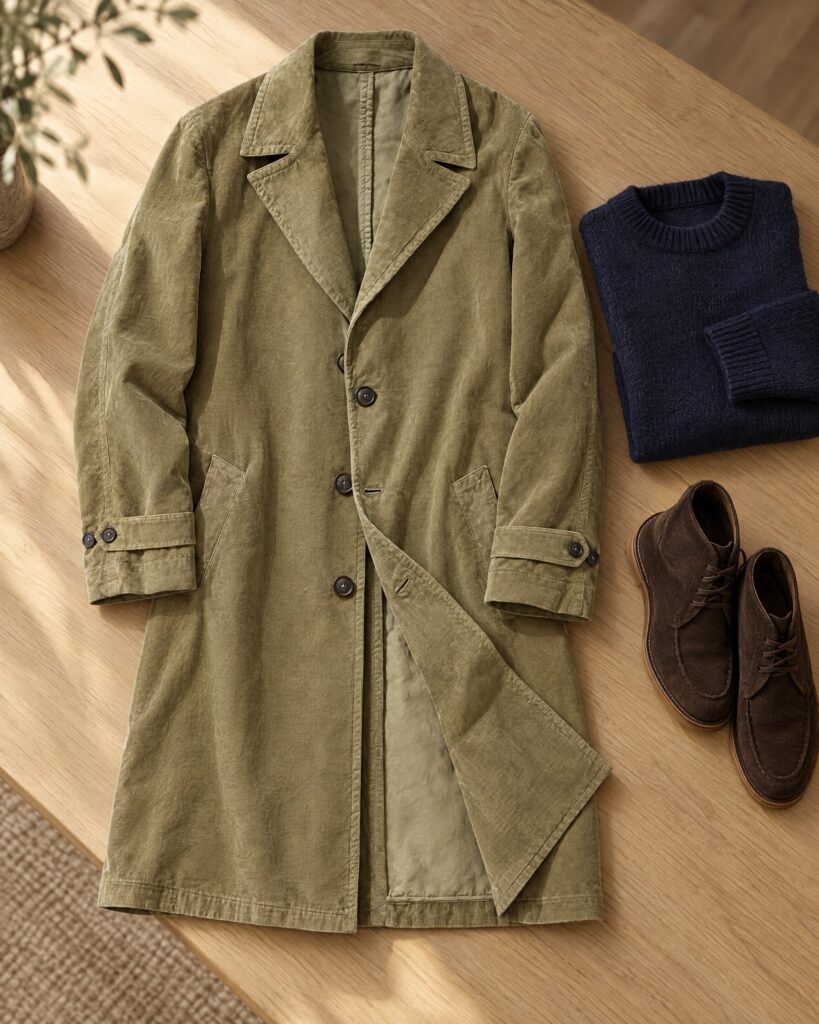 Massimo Alba Duster Coat RAIN2 Agades (No Time To Die)View the piece
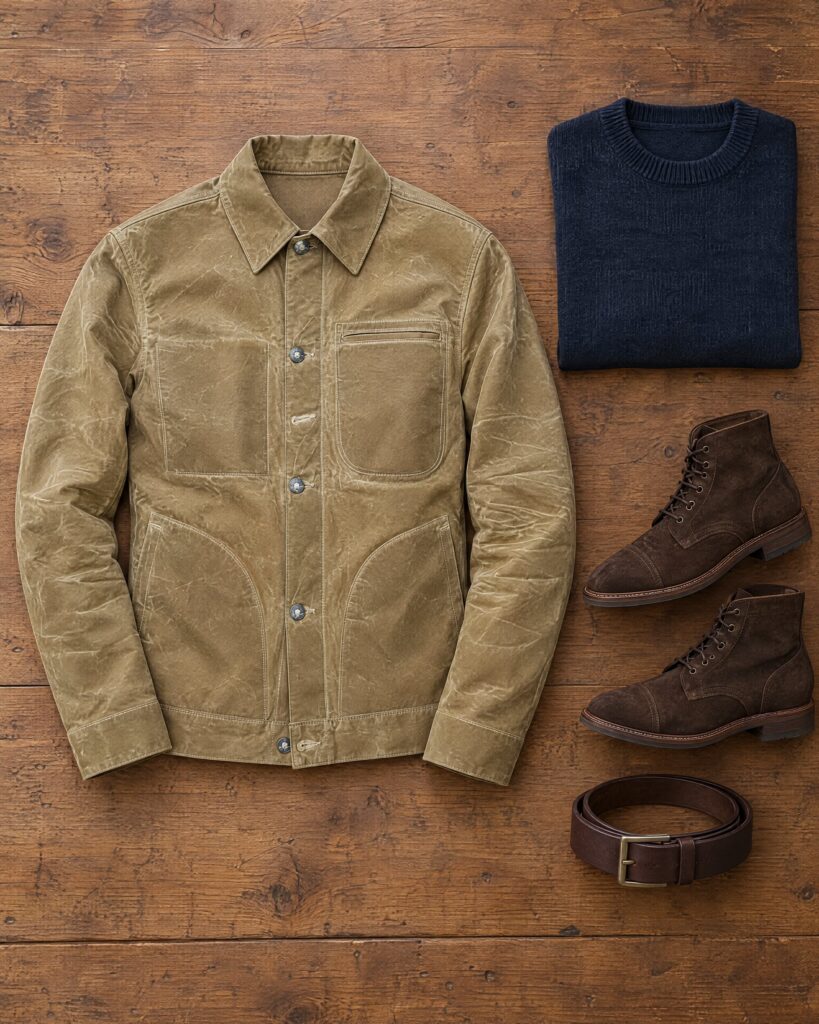 Rogue Territory Ridgeline Supply Jacket, Tan (No Time To Die)View the piece
Gloves
Most men own one good pair and one bad pair, and wear the bad pair more often. Own two good ones instead. For town, the Dents Daniel gloves (5-1007) are black, unlined hairsheep leather, cut close to the hand, with inseam stitching and a palm vent. Dents says it is the glove worn by Craig in Skyfall. They are right for a dark overcoat and a cold morning; the trade for having no lining is that they are for wind and rain rather than deep winter.
For real cold, the Agnelle James gloves are quilted lambskin lined with alpaca, with touchscreen thumb and index fingers on the current pair. They are a coat-and-knitwear glove rather than an evening one, and Agnelle is a family firm from Saint-Junien in the Limousin. For black tie we would reach for something thinner. And for days when practicality wins, the Mil-Tec touch gloves are plain black nylon with a grippy palm, among the least expensive things you can buy from the film. They are a working glove rather than a winter one, which is exactly why they look right. See gloves and scarves for the full list.
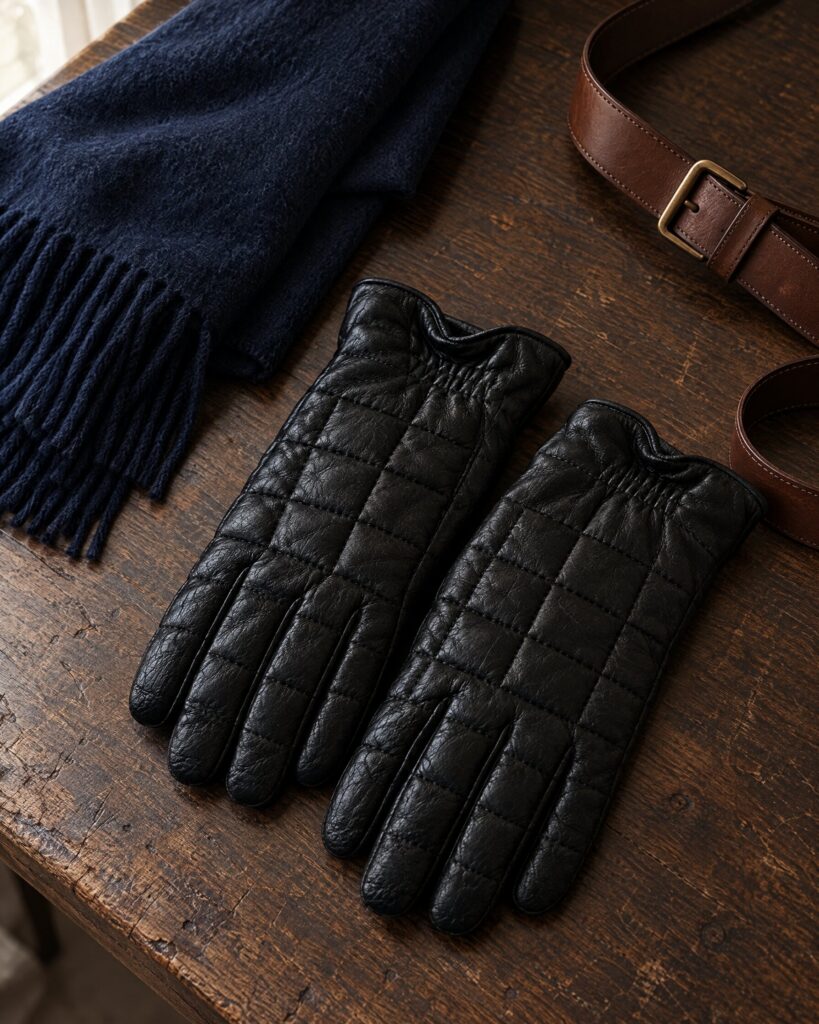 Agnelle James Gloves in Noir Tactile (Spectre)View the piece
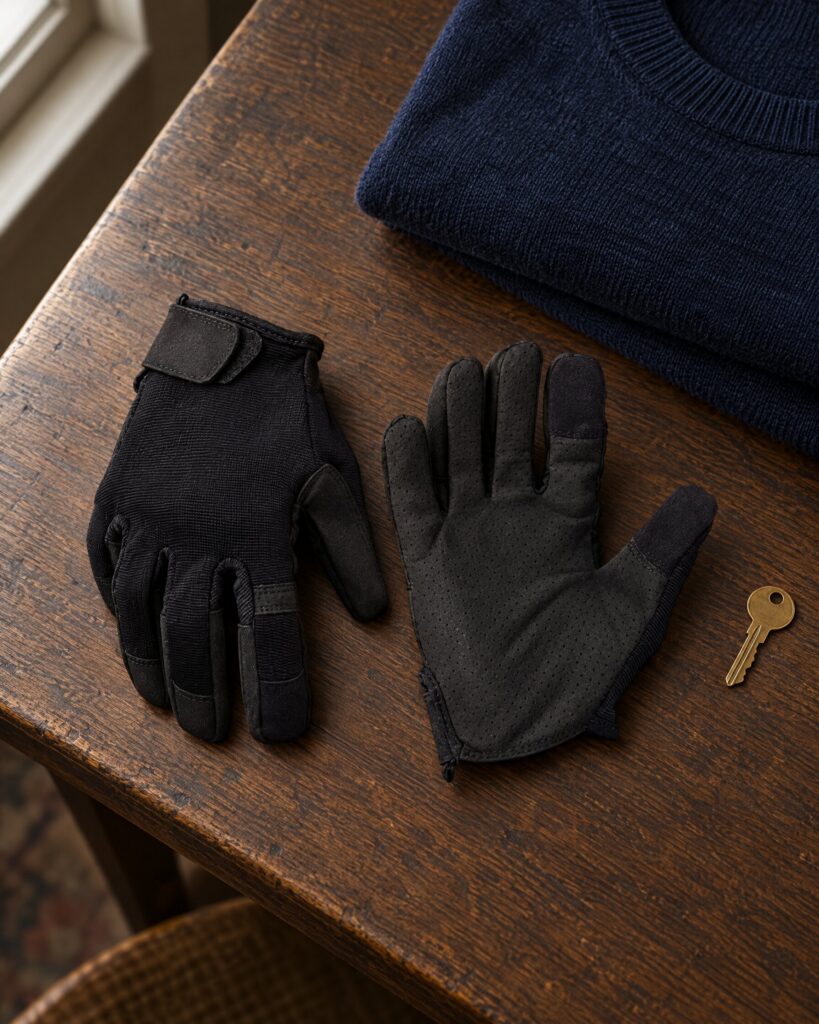 Mil-Tec Touch Gloves Black (No Time To Die)View the piece
Boots
A dress shoe is the wrong tool for a wet pavement. A chukka in rough-out suede, which the maker treats with wax for water resistance, is the better answer, and the Crockett & Jones Molton adds a Dainite rubber sole and a storm welt. It is a three-eyelet boot with nothing to explain, made in Northampton, and Bond wears it in the Norway scenes of No Time To Die.
For snow, the Danner Mountain Light II is another matter: a stitchdown hiker with a GORE-TEX liner and a Vibram outsole, built in Portland, Oregon, and worn in the Austrian sequences of Spectre. It is not a light boot, at 62oz a pair, but it can be rebuilt rather than replaced, and in black it passes with dark knitwear and heavy cotton trousers. Our caution is that the film does not tie this model to No Time To Die, so we do not claim it. The wider shoes range has other options.
Colour and layering
Winter colour should be narrow. Navy, charcoal and black carry the body; grey, olive and brown are the supporting notes. Pale grey, as in the Fumo roll neck, lifts a dark coat, while a black knit under a navy coat is quieter than it sounds. Layer thin to thick, outwards: a fine knit, a jacket if the day calls for one, then the coat. Gloves in a darker shade than the coat, and boots in a darker shade than the trousers, keep the whole thing from looking assembled.
Accessories matter less than they are made to. A scarf in wool or cashmere, tucked in rather than draped, does what a collar cannot; a plain knitted hat in navy or grey does the rest. Neither needs a label.
What we would choose
If we could own one piece from each group, it would be the grey roll neck, the navy peacoat, the Dents gloves and the Molton chukkas. Together they cover work, a weekend and a cold evening out, and none of them dates. The alternatives are there for a different winter: the mock turtle neck for a warmer office, the Agnelle gloves for a harder frost, the Danner boots for snow.
Questions
How should a man dress for winter?
In layers, thinnest first: a fine merino or cashmere knit, a jacket if needed, then a coat in a dense cloth. Keep to two or three colours and finish with leather gloves and boots with a rubber sole.
Is cashmere worth it for a roll neck?
For the one piece that sits against the skin all day, yes. Pure cashmere is soft and warm without bulk, and a roll neck is where the yarn is felt most. Check the label for the fibre content.
Which gloves are best for winter?
Lined leather for real cold, such as quilted lambskin with an alpaca lining. Unlined hairsheep leather is better for town, and technical nylon with touchscreen fingertips is the practical third pair.
What boots grip in wet weather?
Choose a rubber sole, ideally studded, such as a Dainite or Vibram, and a storm welt or waterproof liner. Leather soles are poor on wet stone.
The pieces mentioned
- N.Peal Cable Roll Neck Sweater: pure cashmere, Fumo Grey.
- N.Peal 007 Fine Gauge Mock Turtle Neck: cashmere and silk.
- N.Peal 007 Ribbed Army Sweater: merino and cashmere, navy.
- John Smedley Bobby V-Neck: extra fine merino, black.
- Billy Reid Bond Peacoat: navy melton wool.
- Massimo Alba Duster Coat: needlecord, unlined.
- Rogue Territory Ridgeline Supply Jacket: waxed canvas.
- Dents Daniel gloves: unlined hairsheep leather.
- Agnelle James gloves: quilted lambskin, alpaca lining.
- Mil-Tec touch gloves: technical nylon.
- Crockett & Jones Molton chukka boots: rough-out suede, Dainite sole.
- Danner Mountain Light II: stitchdown, GORE-TEX lined.
Next, see our guide to autumn style, or browse the Spectre wardrobe.
Shop the story
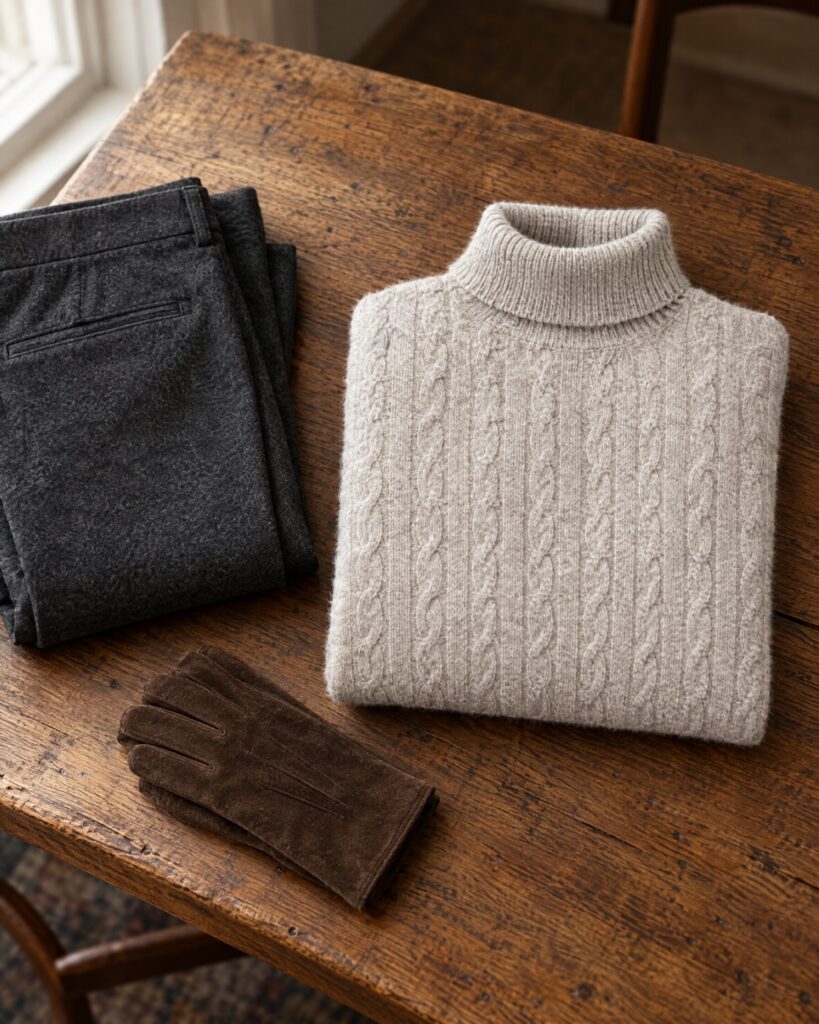 N.Peal Cable Roll Neck Sweater Fumo Grey (Spectre)View the piece
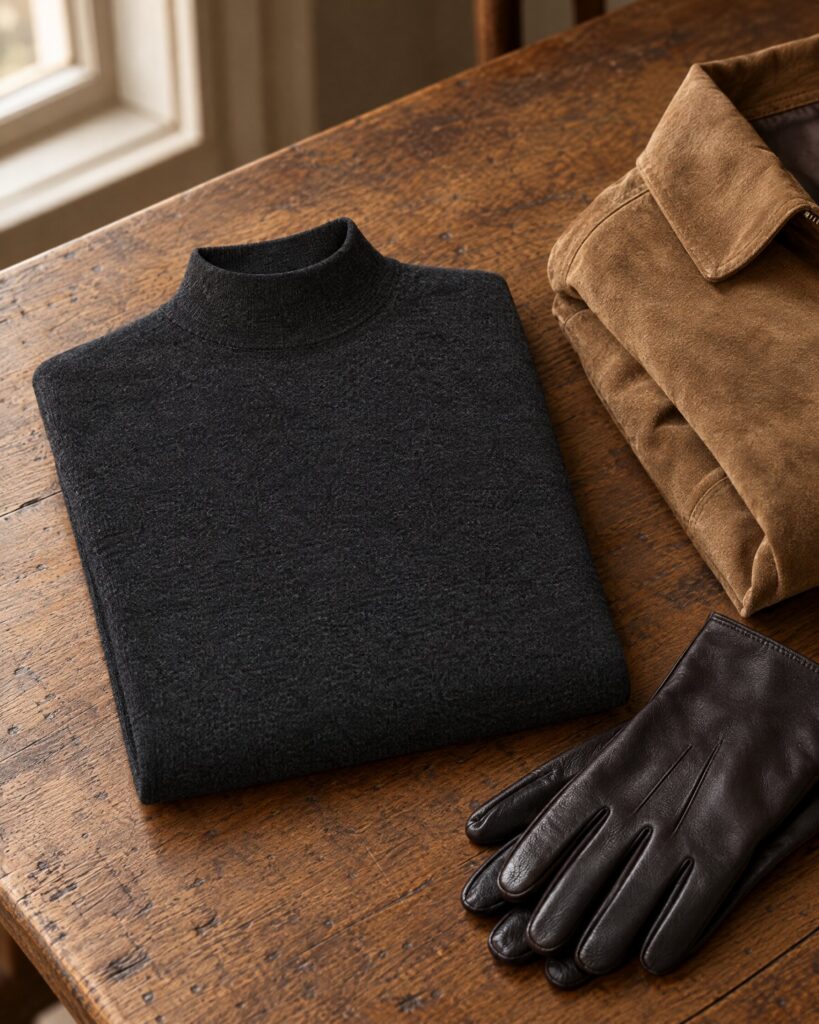 N.Peal 007 Fine Gauge Mock Turtle Neck Sweater (Spectre)View the piece
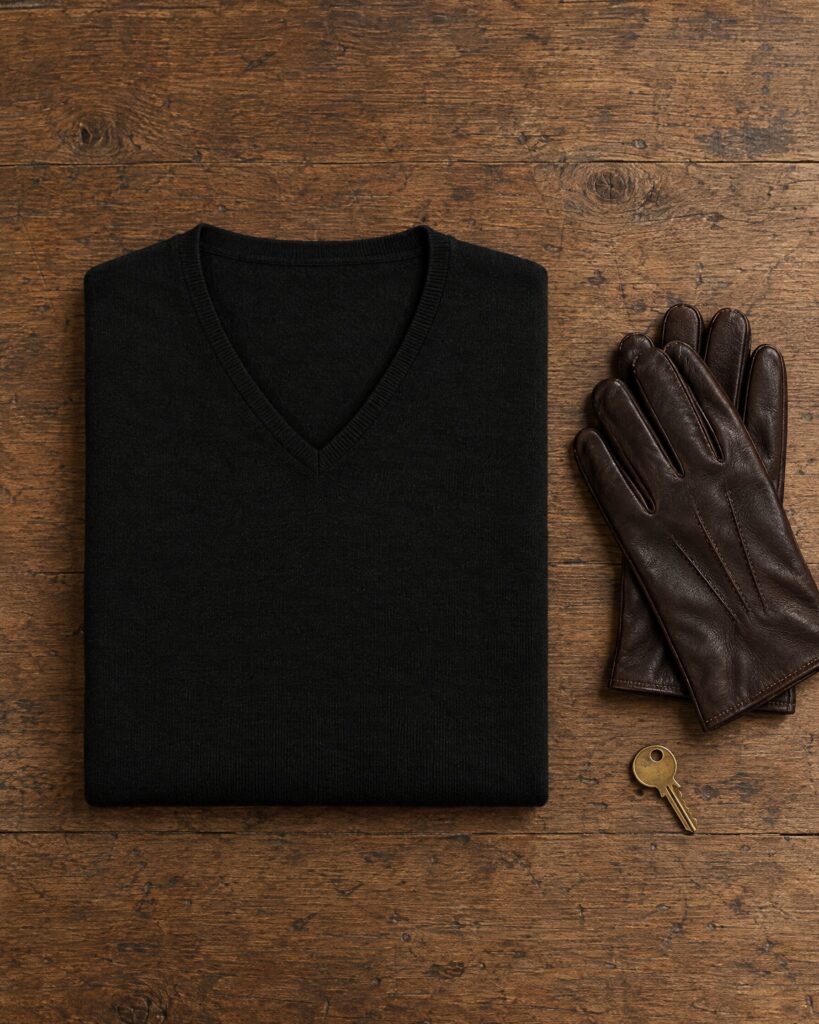 John Smedley Bobby V-Neck Pullover (Skyfall)View the piece
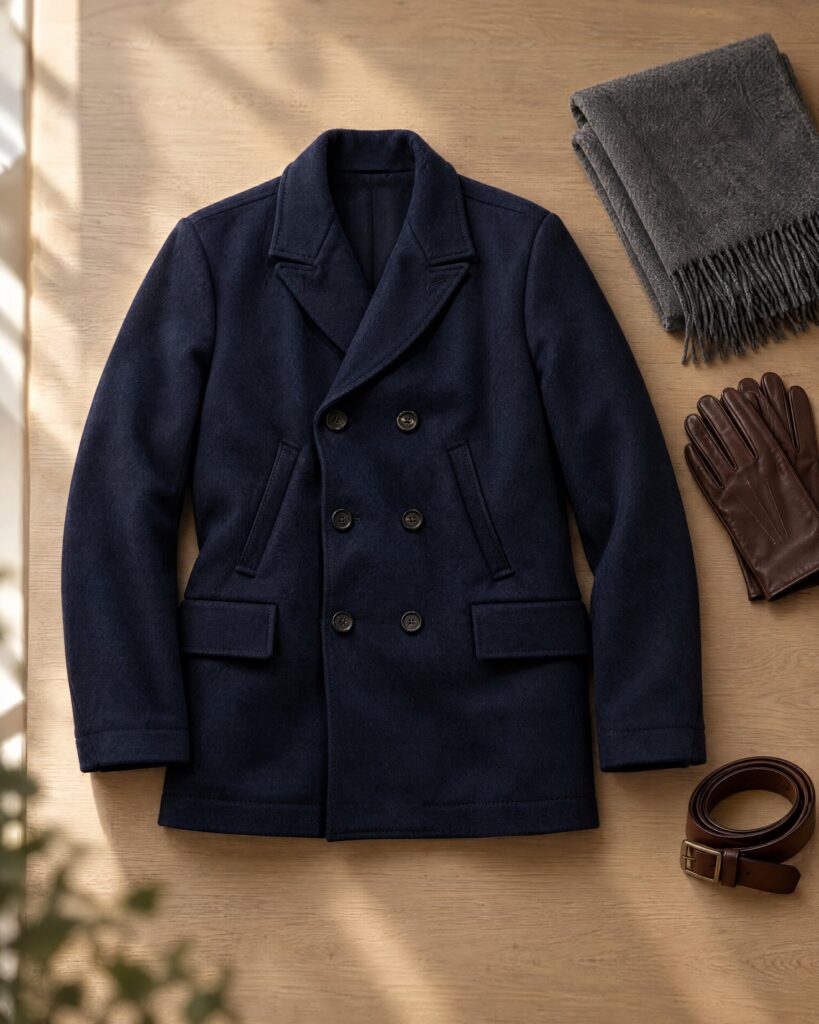 Billy Reid Bond Peacoat in Navy (Skyfall)View the pieceMassimo Alba Duster Coat RAIN2 Agades (No Time To Die)View the pieceRogue Territory Ridgeline Supply Jacket, Tan (No Time To Die)View the piece
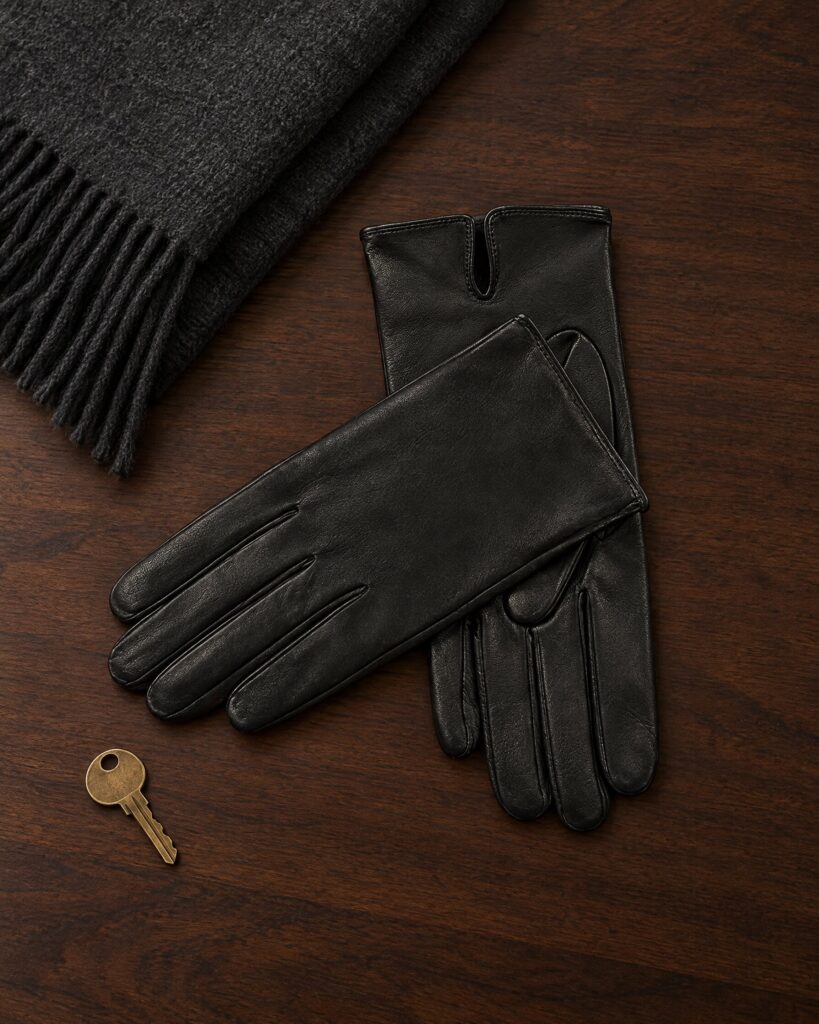 Dents Daniel Gloves 5-1007 (Skyfall)View the pieceAgnelle James Gloves in Noir Tactile (Spectre)View the pieceMil-Tec Touch Gloves Black (No Time To Die)View the piece
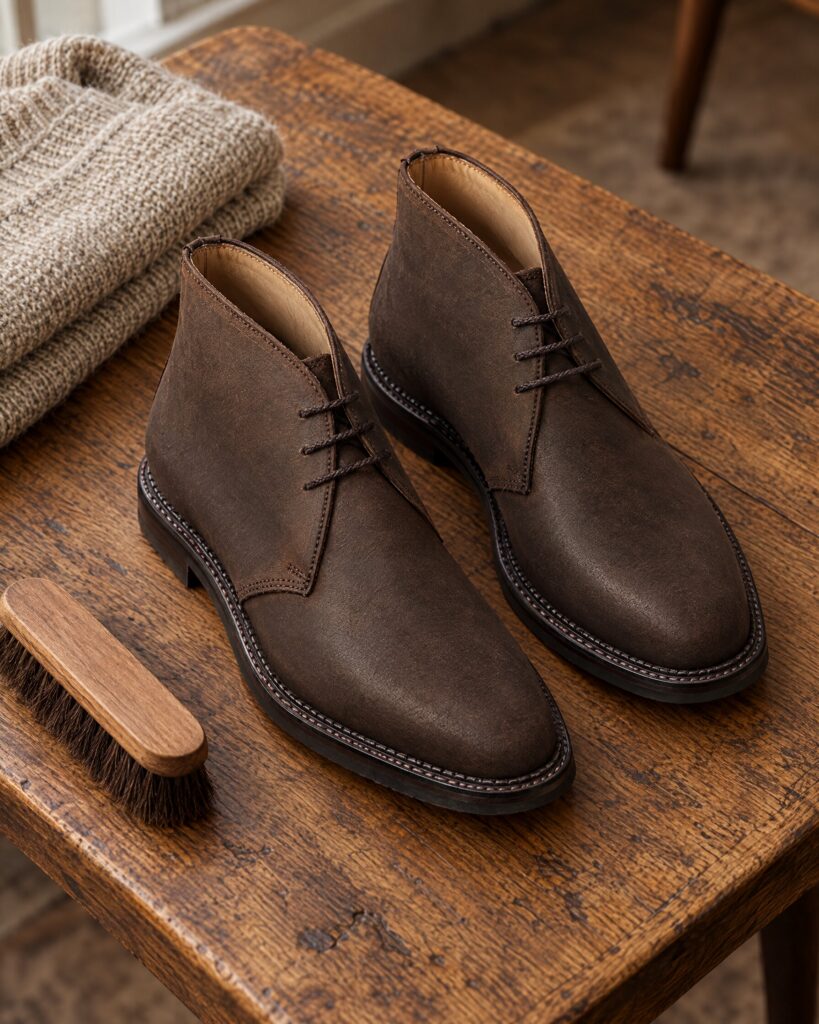 Crockett & Jones Molton Chukka Boots, Dark Brown Rough-Out Suede (No Time To Die)View the piece
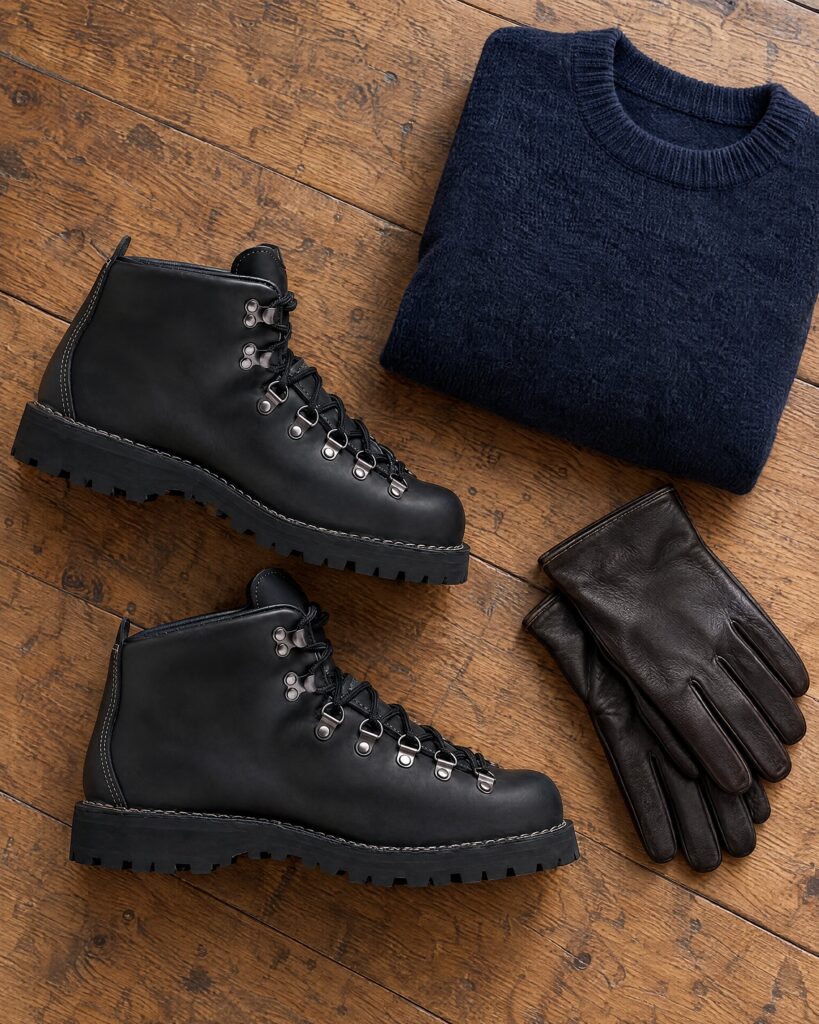 Danner Mountain Light II Black Boots (Spectre)View the piece